Spare scheduled capacity
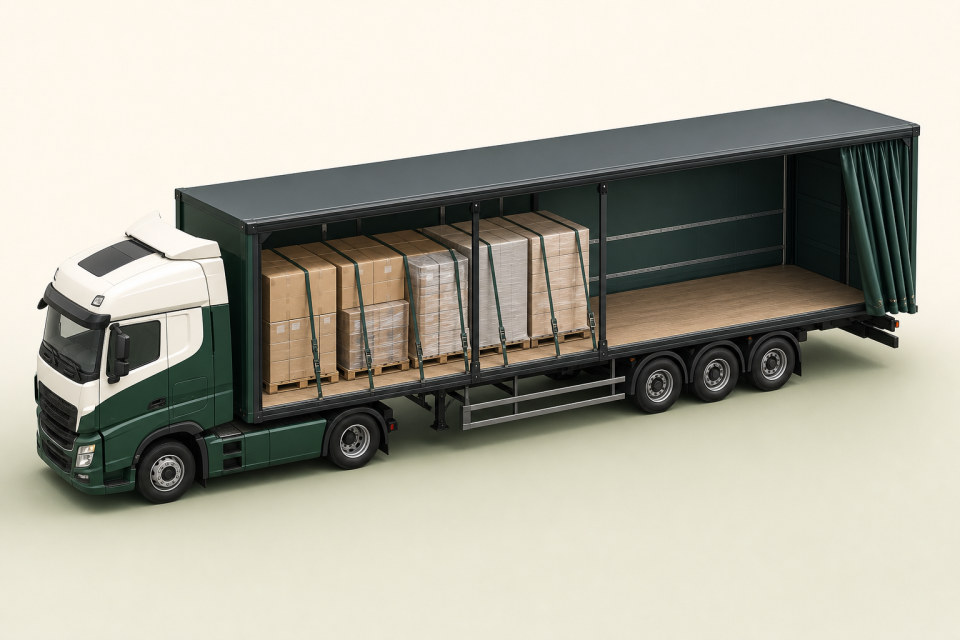
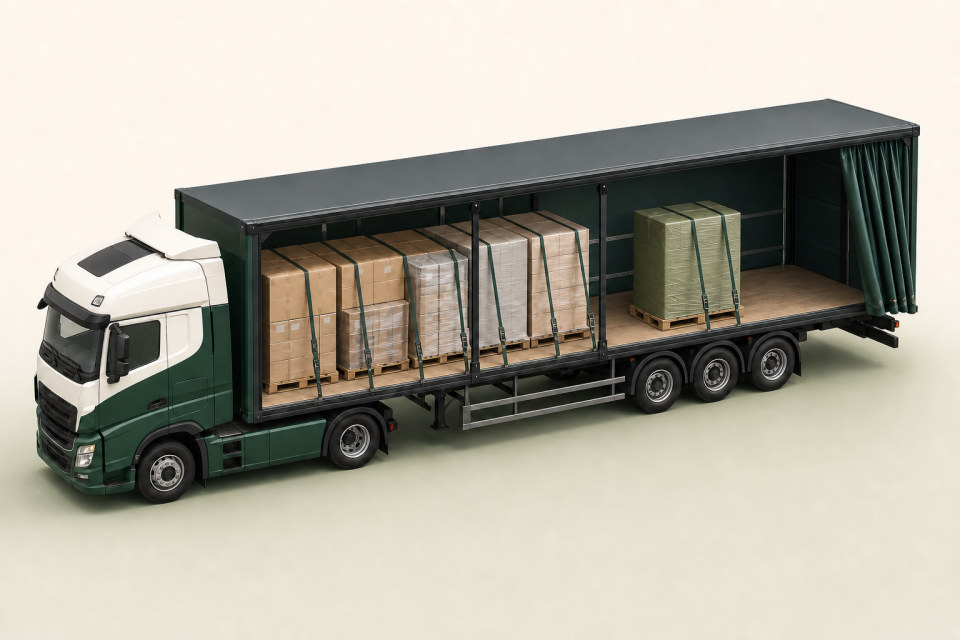
The freight uses available linehaul capacity on a truck already scheduled to make the journey.

Green Loads make smarter use of trucks already heading your way—placing freight into spare, late-available or otherwise empty capacity.
Verified against at least one clear capacity-use criterion.
The simple premise
A linehaul truck has substantial fixed energy and operating costs once its journey is committed. Green Loads use suitable space on that movement instead of treating every shipment as if it needs a dedicated journey.
It is practical capacity matching: the truck was going, the deck had room, and flexible freight makes the journey work harder.
Green Load Verified
A booking receives Green Load Verified status when it meets one or more of these criteria.
The freight uses available linehaul capacity on a truck already scheduled to make the journey.
It is booked after unsold deck space has significantly reduced in value—often within 48 hours of departure.
The shipment uses capacity that would otherwise be likely to travel empty on that movement.
It is booked as a Standby Freight or Standby Flexi service, designed around available capacity.
What we look for
Verification is tied to booking and capacity conditions—not vague sustainability language.
| Qualifying signal | What it tells us | Typical booking evidence |
|---|---|---|
| Scheduled linehaul | The truck movement exists independently of this load. | Route and departure already planned by the carrier. |
| Late-available space | Remaining deck space is approaching departure and has reduced commercial value. | Booking time compared with the planned departure—commonly inside 48 hours. |
| Empty-running risk | Suitable capacity is expected to move without freight unless matched. | Carrier capacity and route direction at the time of matching. |
| Standby product | The customer accepts a service designed to wait for a suitable capacity match. | Standby Freight or Standby Flexi selected at booking. |
How it works
Green Load matching starts with the journey, not with a promise to send another vehicle. Freight details, route, timing and service choice help identify a suitable slot.
What the badge means The booking meets a defined capacity-use criterion based on the information available when it is verified.
A carrier has a linehaul movement or repositioning leg with suitable capacity.
Route, dimensions, weight, handling needs and timing must work for the available space.
The booking qualifies through scheduled, late-available, otherwise empty or Standby capacity.
Your load travels with other freight on a movement that was already expected to run.
Choose what matters most
Both services move freight with professional carriers. The difference is how the movement is scheduled.
| Priority Freight | Green Load services | |
|---|---|---|
| Best for | Firm timeframes and faster commitment | Flexible freight seeking capacity-led value |
| Scheduling | Planned around your shipment requirements | Matched around a suitable existing movement |
| Price approach | Priority fixed-price option | Standby fixed price or customer-set Flexi offer |
| Green Load Verified | Not automatically | Yes—one or more criteria must apply |
Plain-English environmental claim
Trucks still use fuel and every freight movement has an impact. Green Load Verified does not mean carbon neutral, emissions free or independently lifecycle certified. It means the load meets a defined test for using capacity on a journey expected to happen anyway. That is a narrower claim—and a more useful one.
Good questions
No. The truck journey still has an environmental footprint. The badge describes how capacity is used; it is not a carbon-neutral claim or a lifecycle emissions certificate.
It must meet at least one of the four criteria: scheduled spare capacity, booking after the commercial tipping point, capacity likely to travel empty, or a Standby Freight or Standby Flexi booking.
Once a truck is committed to a route, unused deck space becomes time-sensitive. Flexible freight can be priced to fill that space and contribute to the cost of the planned journey.
Often, yes. Standby services trade some scheduling certainty for access to suitable spare capacity. The timing and expectations shown when you book still apply.
Ready when the right truck is
List your freight, compare the service options and choose the balance of timing and value that works for you.